<img height="1" width="1" style="display:none;" alt="" src="https://px.ads.linkedin.com/collect/?pid=8016306&amp;fmt=gif">
Free Whitepaper

Which Technology Investments
Create Real Value for
Infrastructure in 2026?

WGI's annual technology report cuts through the noise. Get a practical, engineering-grounded view of AI, digital twins, lidar, autonomous vehicles, and six more trends actively reshaping how AEC projects are planned, delivered, and operated.

  • How governed, enterprise AI is replacing ad hoc tools in AEC workflows
  • Why digital twins are evolving into lifecycle management platforms — not just 3D models
  • How lidar and AI-driven change detection are enabling predictive asset management
  • Where integration outperforms isolated tools — and how to get there pragmatically
WGI — ENR Top 500 Firm National multidisciplinary engineering, planning & geospatial
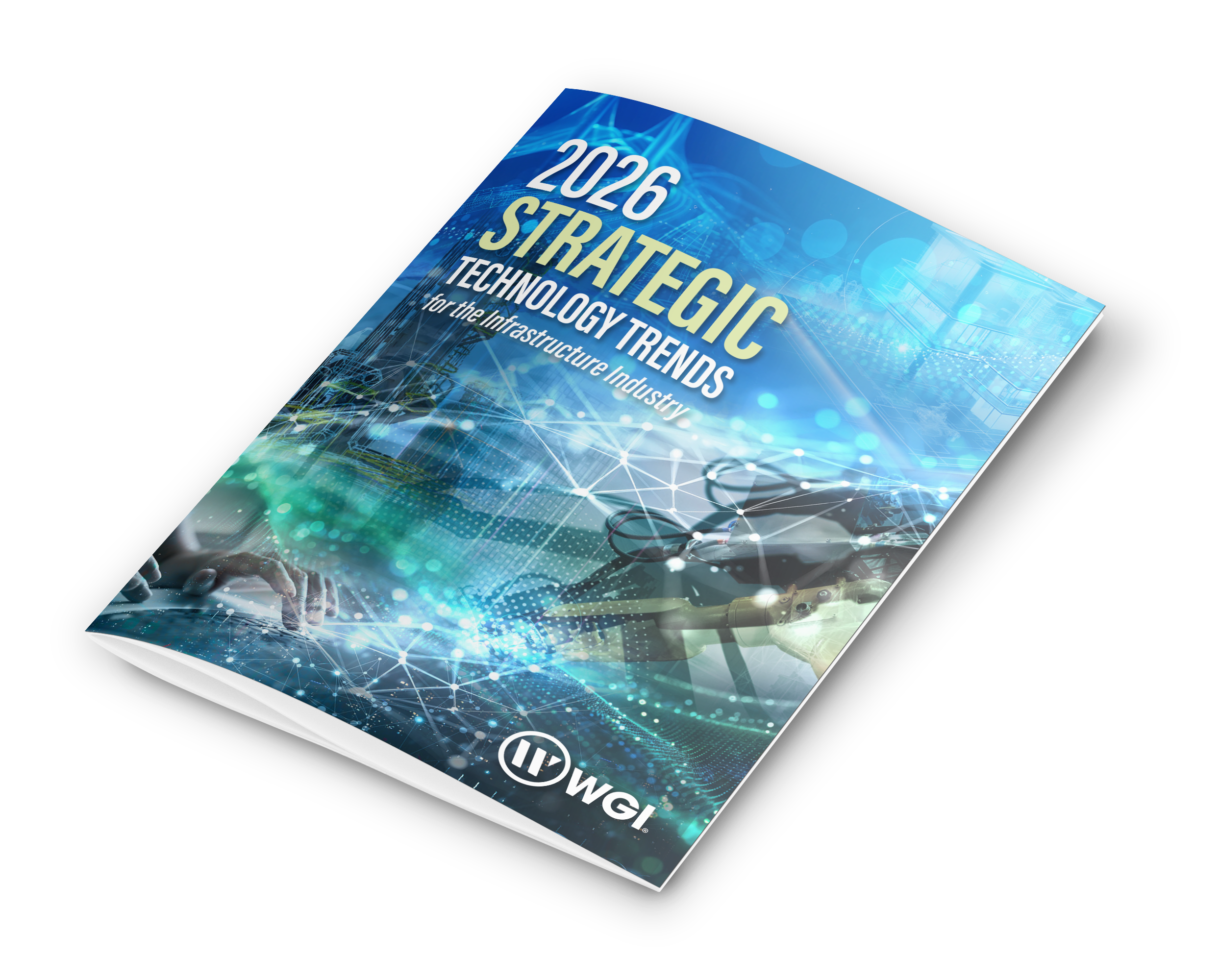
2026 Strategic Technology Trends Whitepaper

Download the Free 2026 Tech Trends Whitepaper

Instant access — no purchase required
Nine Trends. One Integrated Picture of Digital Maturity.

Each trend is examined through real infrastructure applications and engineering judgment — not theoretical forecasts or vendor-driven content. WGI's practitioners explain what's driving adoption, what's still maturing, and how these tools reinforce one another.

AI-assisted document workflow

Enterprise AI & RAG 2.0

AEC firms are moving past public LLMs toward governed, organization-specific AI that connects securely with internal systems, standards libraries, and project data. RAG 2.0 adds traceability — engineers can see exactly where information originates. Approximately 74% of AEC firms are already using AI in project delivery.

Digital twin visualization of infrastructure

Digital Twins

Digital twins are expanding beyond pilot projects as owners seek improved visibility into asset performance, long-term risk, and return on investment. By integrating design data, operational systems, sensors, and analytics, they enable scenario testing, proactive maintenance, and capital planning. Digital twins can reduce operational and maintenance costs by up to 35%.

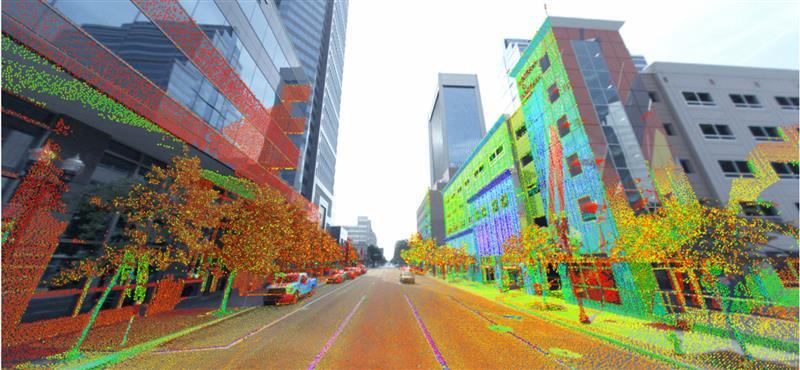
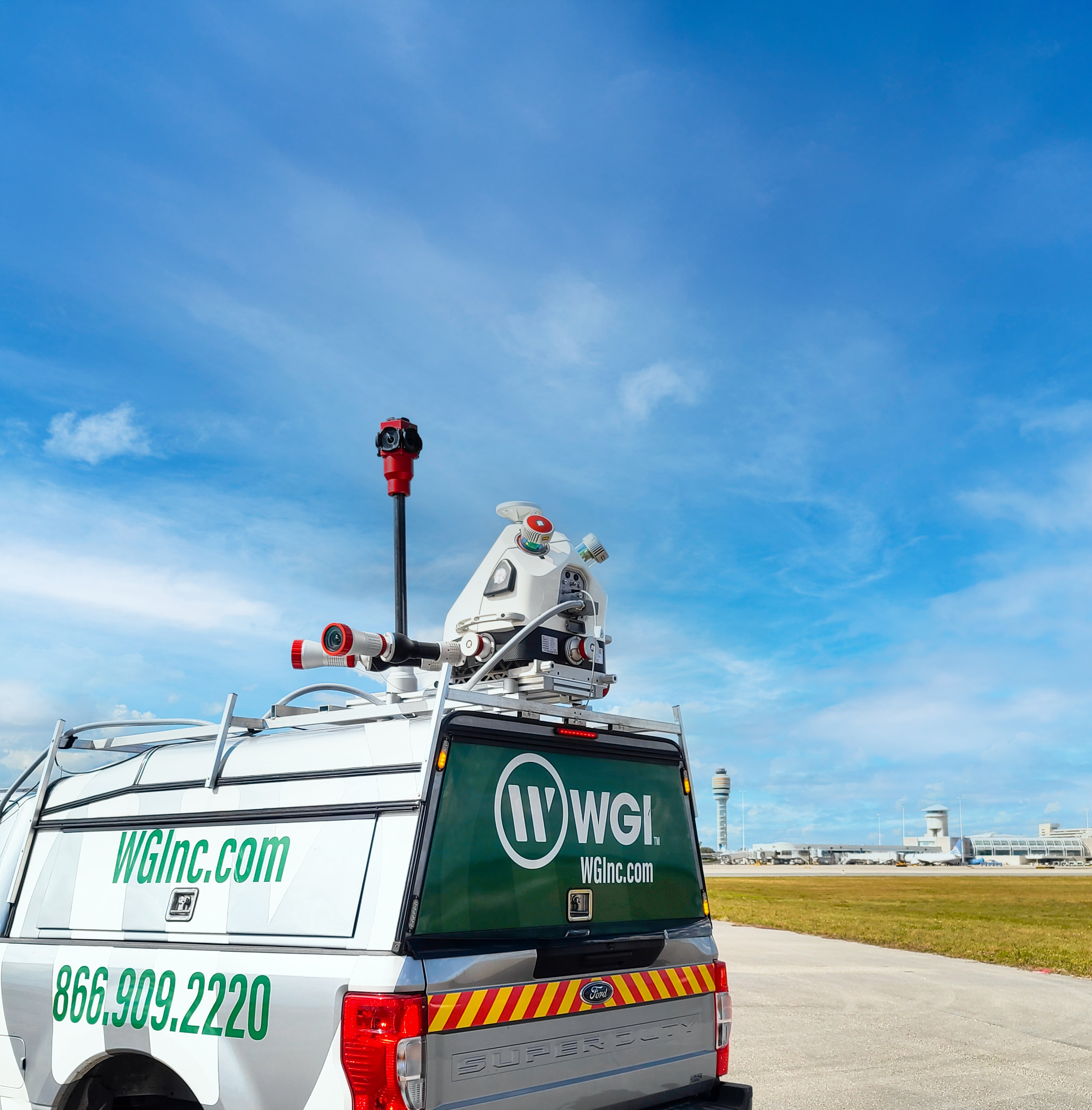
Street-level LiDAR point cloud

LiDAR & Change Detection

High-density 3D point clouds combined with AI workflows are enabling sub-centimeter asset inventories for guardrails, signage, pavement markings, and drainage structures. When datasets are compared across collection cycles, the analysis extends into the time dimension — enabling objective condition indexing, deterioration rate calculation, and remaining service life estimation.

Data visualization and analytics

Visualization

Visualization has become a baseline expectation across the project lifecycle — not an optional enhancement. Interactive models and immersive experiences allow agency leaders, technical teams, and community stakeholders to validate projects before construction begins, accelerating approvals and reducing late-stage design changes.

FloodWise real-time flood risk map — asset-level intelligence

Operational Intelligence

Advances in cloud computing, data integration, and AI now allow infrastructure systems to ingest live and forecasted data, maintain current system models, and deliver actionable insight when it matters most. Platforms like FloodWise® replace static compliance models with real-time, asset-level intelligence — answering exactly which streets, structures, and facilities will be affected before an event occurs.

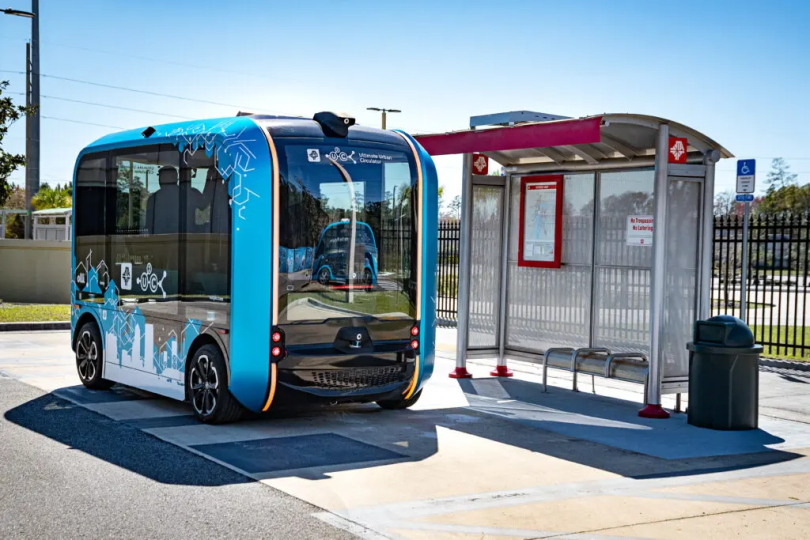
Autonomous electric shuttle at transit stop

Autonomous & Connected Vehicles

Autonomy is not just a vehicle challenge — it's an infrastructure systems challenge. Self-driving transit, freight automation, eVTOL aircraft, drone logistics, and campus-scale people movers each introduce new requirements for digital mapping, geospatial precision, airspace coordination, and real-time data integration. Infrastructure readiness is the key factor shaping the pace of adoption.

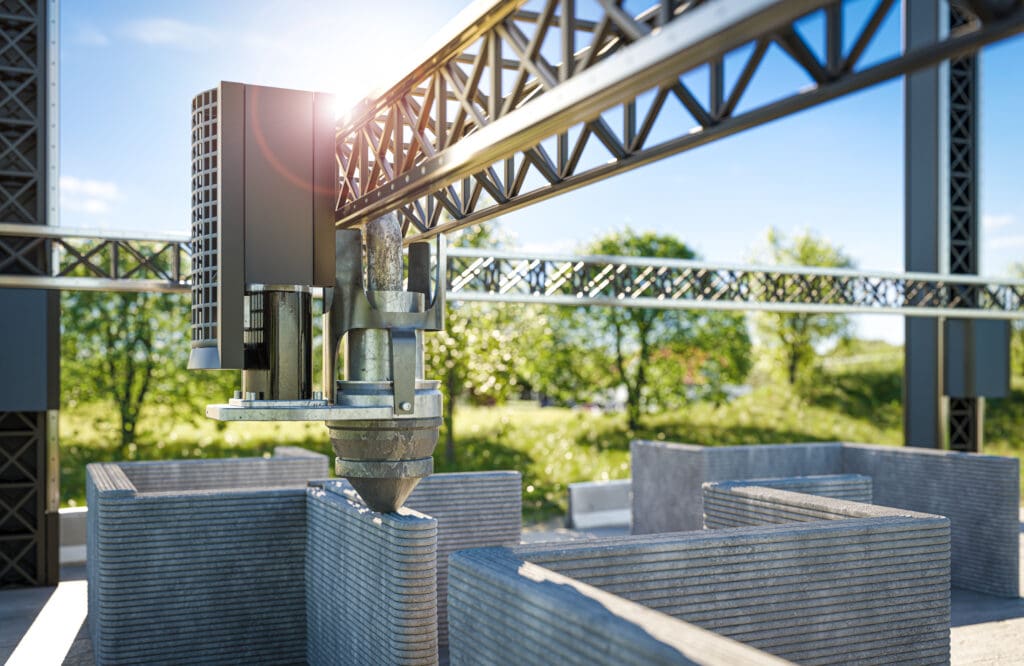
Robotic arm 3D concrete printer

3D Printing in Construction

Robotic-arm printing systems are expanding design flexibility beyond fixed-rail predecessors — printing in multiple directions, supporting complex geometries, and adapting more readily to site constraints. Advancing materials science and improved concrete formulations are making additive construction increasingly viable for housing and repeatable building types where speed, repeatability, and labor efficiency are critical.

Modern data center facility at dusk

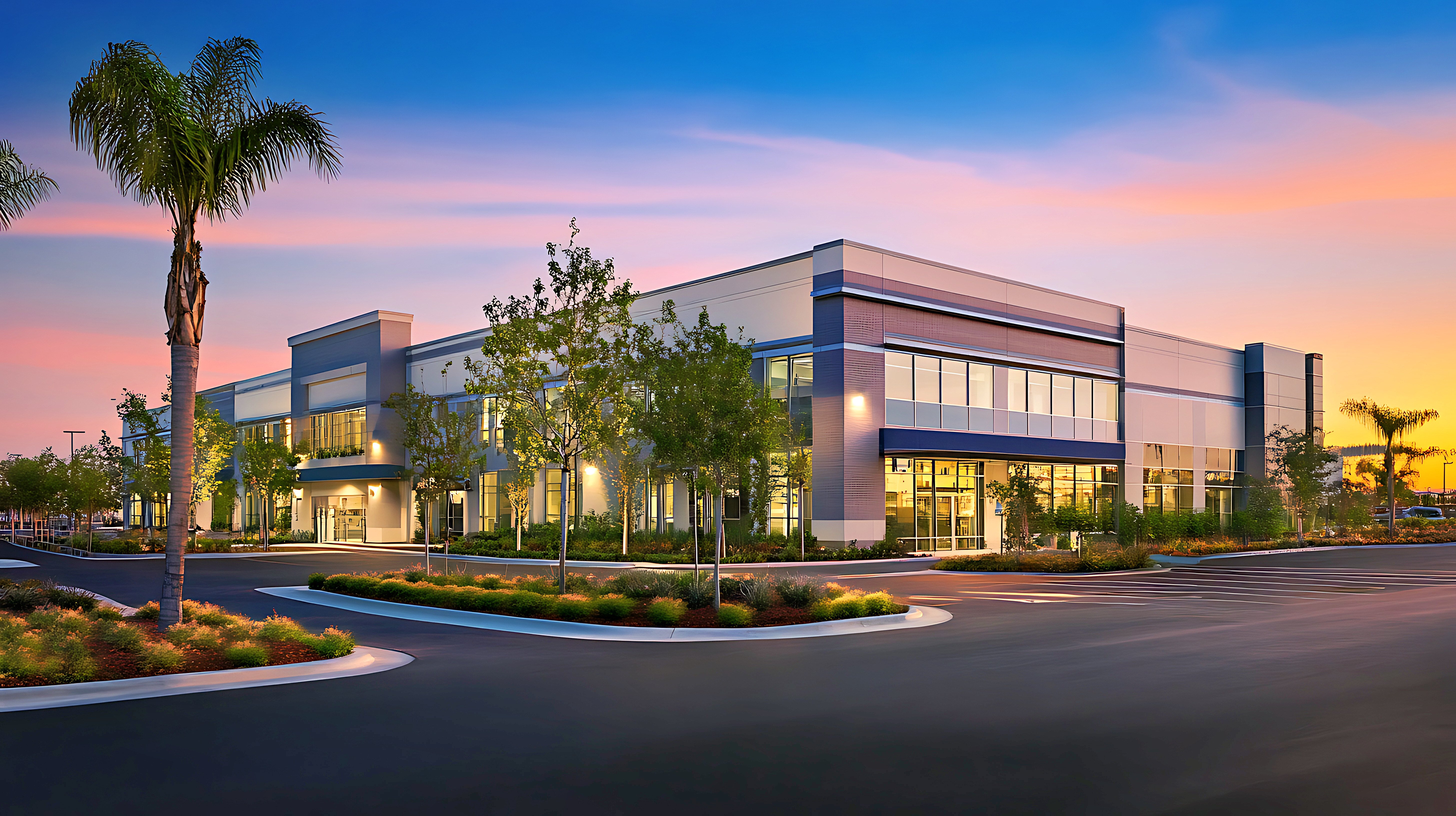
Data Center Infrastructure

AI-driven demand is fundamentally reshaping data center design — increasing power density, evolving cooling strategies, and pushing grid interconnection and land constraints to their limits. AEC delivery now requires coordination across civil, structural, MEP, and power systems under aggressive schedules. Data centers are not just enabling digital transformation — they are dependent on it.

Human and robotic hands touching — physical AI concept

Drones & Physical AI

Physical AI — intelligent systems embedded in robots and drones — is beginning to move from industrial environments into broader infrastructure applications. Potential use cases range from automated inspection and maintenance to construction support and hazardous-environment operations. As sensing, mobility, and decision-making capabilities improve, these systems may augment human labor in tasks that are repetitive, dangerous, or difficult to staff.

74%
of AEC firms are using AI in one or more phases of project delivery
35%
potential reduction in operational & maintenance costs through digital twins
9
technology trends analyzed through real-world infrastructure engineering judgment

Digital Maturity Has Become a Baseline Requirement — Not a Differentiator

Each year, WGI examines the technologies shaping the future of infrastructure and the AEC industry. These trends are not abstract ideas or distant forecasts. They reflect real shifts already influencing how projects are planned, designed, delivered, and operated across the United States.

The 2026 edition reflects an industry at an inflection point. Digital tools are no longer evaluated in isolation or adopted as experiments. They are increasingly treated as foundational capabilities that influence how projects are conceived, delivered, and sustained. Data is no longer scarce, models are no longer static, and automation is no longer confined to isolated tasks.

Across the AEC market, the integration of systems, intelligence, and workflows — not the adoption of individual tools — is what defines digital maturity. WGI grounds every trend in engineering judgment and real infrastructure applications.

"Technology is only as valuable as the problems it solves for our partners. We aren't just watching for faster software — we are tracking the trends that fundamentally change the economics of the built environment."

Marc Remmert, PE — VP, Buildings Division Leader, WGI

"We are moving from a world where we build and hope, to a world where we simulate and know. The digital twin is the difference between reacting to decay and engineering for resilience."

Joelle McCormack, PE — Innovation Engineer, WGI

"We are approaching a 'light switch moment' where we will awake one day to find the AEC world we once knew has been digitally transformed. Our decisions today will dictate if that moment is a competitive advantage or a realization that our business model has become obsolete."

Gregory Sauter, PE — President, WGI

Have Questions About the Report?

Reach out directly to the WGI experts who authored this whitepaper.

See which technologies create real infrastructure value in 2026

Download the free whitepaper and get a clear, practical view of what's reshaping the AEC industry this year.

Download the Free Whitepaper ↓